Bhopal · Batch 2025 · 5 months ago
Application No: MIT/SKM/2025/25841
Clear communication throughout
Joining BCA in the founding batches turned out to be an advantage. We get more faculty attention, leadership roles in clubs and direct access to the placement cell.

Varanasi · Batch 2026 · 9 months ago
Application No: MIT/SKM/2026/26818
Excellent academic experience
What I like most about BCA at MIT Sikkim is the balance of theory and practical work. Assignments, internal assessments and project work are spread across the semester, so there is no last-minute pressure.

Ludhiana · Batch 2025 · 2 months ago
Application No: MIT/SKM/2025/27795
Worth every rupee
Campus environment in Namchi is calm and study-friendly. For BCA students the labs and library resources are more than enough, and the staff is always approachable.

Calicut · Batch 2026 · 6 months ago
Application No: MIT/SKM/2026/28772
Genuine university, transparent process
Joining BCA in the founding batches turned out to be an advantage. We get more faculty attention, leadership roles in clubs and direct access to the placement cell.
Patna · Batch 2025 · 10 months ago
Application No: MIT/SKM/2025/29749
Flexible and well organised
What I like most about BCA at MIT Sikkim is the balance of theory and practical work. Assignments, internal assessments and project work are spread across the semester, so there is no last-minute pressure.
Vadodara · Batch 2026 · 3 months ago
Application No: MIT/SKM/2026/30726
Highly recommended for working students
Campus environment in Namchi is calm and study-friendly. For BCA students the labs and library resources are more than enough, and the staff is always approachable.
Chennai · Batch 2025 · 7 months ago
Application No: MIT/SKM/2025/31703
Practical learning, real projects
Joining BCA in the founding batches turned out to be an advantage. We get more faculty attention, leadership roles in clubs and direct access to the placement cell.
Siliguri · Batch 2026 · 11 months ago
Application No: MIT/SKM/2026/32680
Best decision of my career
What I like most about BCA at MIT Sikkim is the balance of theory and practical work. Assignments, internal assessments and project work are spread across the semester, so there is no last-minute pressure.
Namchi · Batch 2025 · 4 months ago
Application No: MIT/SKM/2025/33657
Placement guidance was a big plus
Campus environment in Namchi is calm and study-friendly. For BCA students the labs and library resources are more than enough, and the staff is always approachable.
Lucknow · Batch 2026 · 8 months ago
Application No: MIT/SKM/2026/34634
Curriculum is truly industry-ready
Joining BCA in the founding batches turned out to be an advantage. We get more faculty attention, leadership roles in clubs and direct access to the placement cell.
Kochi · Batch 2025 · 1 month ago
Application No: MIT/SKM/2025/35611
Smooth admission, no hidden charges
What I like most about BCA at MIT Sikkim is the balance of theory and practical work. Assignments, internal assessments and project work are spread across the semester, so there is no last-minute pressure.
Ranchi · Batch 2026 · 5 months ago
Application No: MIT/SKM/2026/36588
Confident about my future now
Campus environment in Namchi is calm and study-friendly. For BCA students the labs and library resources are more than enough, and the staff is always approachable.
Gorakhpur · Batch 2025 · 9 months ago
Application No: MIT/SKM/2025/37565
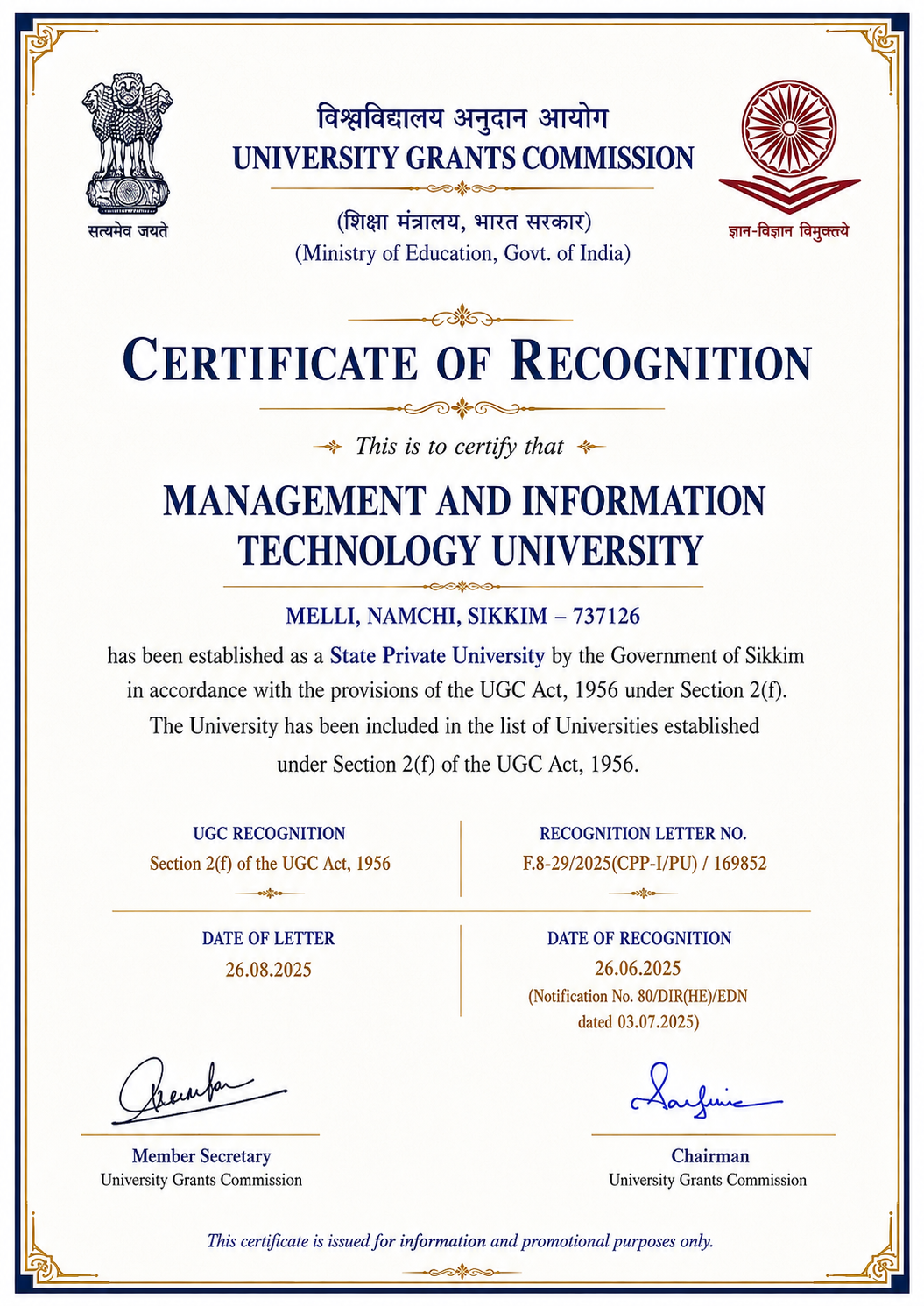
Degree is valid and well recognised
Joining BCA in the founding batches turned out to be an advantage. We get more faculty attention, leadership roles in clubs and direct access to the placement cell.
Ahmedabad · Batch 2026 · 2 months ago
Application No: MIT/SKM/2026/38542
Very supportive counselling team
What I like most about BCA at MIT Sikkim is the balance of theory and practical work. Assignments, internal assessments and project work are spread across the semester, so there is no last-minute pressure.